


By Breck Hapner
A criminal charge doesn’t arrive politely. It arrives with deadlines, leverage, and a system that keeps moving whether you’re ready or not. By the time the phrase criminal defense attorney near me is on the screen, the state has already started building its version of events—badges, budgets, and a storyline polished for maximum effect. You’re left juggling court dates, work obligations, and the kind of consequences that don’t wait for verdicts: license trouble, job risk, housing questions, and a record that starts doing damage while the case is still “pending.” Joseph Horowitz stands out for one reason that actually matters: he knows how Pennsylvania cases get assembled in the real world, and he knows how to attack them early—before assumptions calcify into “the record” and before momentum becomes the prosecution’s biggest advantage.
A lot of criminal defense marketing sounds like a motivational poster with a law license. That’s cute until you’re the one looking at a DUI suspension letter, a drug charge inflated into “intent,” or a gun case born from a traffic stop and a consent search you didn’t realize you could refuse. What separates a serious criminal defense attorney from the rest isn’t volume or swagger. It’s how they operate when the case is still young: controlling timelines, preserving evidence, forcing specificity, and making prosecutors prove what they’re implying. That’s the Horowitz lane.
The modern criminal process runs on speed, plea leverage, and paperwork discipline. The defense that wins runs on the same things—only cleaner, smarter, and more relentless.
What a Great Criminal Defense Attorney Actually Does, in the Real World
A great criminal defense attorney is not a tour guide through courtrooms. A tour guide tells you where to stand. A defense attorney changes what happens when you stand there.
First, they take away the state’s favorite advantage: time. Prosecutors benefit when evidence fades, videos rotate off servers, and police reports get more polished with each retelling. Early defense work is not “extra.” It’s the difference between litigating facts and litigating fiction.
Second, they separate claims from proof. Prosecutors write as if conclusions are evidence: “furtive movement,” “odor,” “consistent with distribution,” “known drug area,” “attempted concealment.” The defense job is to demand: what exactly happened, where is the video, what is the legal standard, and did law enforcement meet it?
Third, they treat collateral consequences as the main event, not a footnote. Convictions are bad. The life fallout can be worse. Background checks don’t care about context. Licensing boards don’t care about your intentions. Landlords don’t care about your stress. If your lawyer only thinks about the courtroom outcome and ignores the downstream damage, you’re paying for half a defense.
If you want a clean, authoritative definition of how bad the downstream damage can be, it’s stated plainly by a national clearinghouse. According to the National Inventory of Collateral Consequences of Criminal Conviction (NICCC) resource, “Collateral consequences are legal and regulatory sanctions and restrictions that limit or prohibit people with criminal records from accessing employment, occupational licensing, housing, voting, education, and other opportunities.” That’s not drama. That’s the blueprint for why a criminal case can ruin your life even when the court-imposed sentence looks “manageable.”
So when someone searches criminal defense attorney near me, the right question isn’t “who seems nice.” It’s “who understands that this case has two outcomes: the legal outcome and the life outcome.”
The System Isn’t Designed to be Fair to the Unrepresented
There’s a reason the criminal system feels like it’s always nudging people toward quick resolutions. It’s a volume machine. Trials are expensive. Litigation is slow. Pleas are fast. And when courts are crowded, “efficiency” becomes a moral virtue—even though it has nothing to do with truth.
The public defense system is a crucial backstop, but it’s often strained by impossible caseloads. According to a May 20 Governing article, “Overloaded with cases, public defenders often cannot give enough time to each client, and defendants may face long waits to get an attorney.” That line is not an attack on public defenders; it’s an indictment of the environment they’re forced to work in.
A private defense attorney doesn’t guarantee victory. What it can guarantee is attention: time to review footage, time to subpoena records, time to challenge warrants, time to file motions that aren’t templates. Joseph Horowitz’s practice is built around giving that attention where it counts—early—because once a case turns into a habit for the court, it gets harder to disrupt.
And in a system where pleas dominate, trial readiness is leverage. This is where a lot of lawyers talk tough and then quietly negotiate from fear. Horowitz negotiates from preparation. When the state knows the defense is ready to litigate suppression, challenge testing, and force witnesses to the stand, the tone changes.
According to a May 7 National Association of Criminal Defense Lawyers statement, the trial penalty “enables a wide variety of coercive tactics by prosecutors.” A great defense attorney doesn’t whine about that reality. They neutralize it by making the case risky enough that coercion stops working as well.
Joseph Horowitz’s Operating Principle: Control the Record Early
Most defendants don’t lose because they’re guilty. They lose because the record gets set against them early and then treated as immovable. Horowitz’s approach is the opposite. He starts by controlling what the record contains and what it omits.
That means evidence preservation. It means getting the bodycam, dashcam, dispatch logs, lab packets, calibration records, phone extraction reports, chain-of-custody documents, and any surveillance video before it disappears or becomes inconvenient. If you think evidence “should” be kept, welcome to real life: retention policies exist, and they don’t care about your case.
According to an April 10 PhillyVoice article, “State police retain all body-camera footage for a minimum of 180 days before it’s deleted.” That sentence is why speed matters. Waiting is not neutral. Waiting can destroy your best evidence.
It also means forcing specificity. Police reports are written to justify what happened, not to question whether it should have happened. Horowitz treats the stop, search, interrogation, testing, and seizure as a chain that must be lawful at every link. Break one link, and the chain can fail.
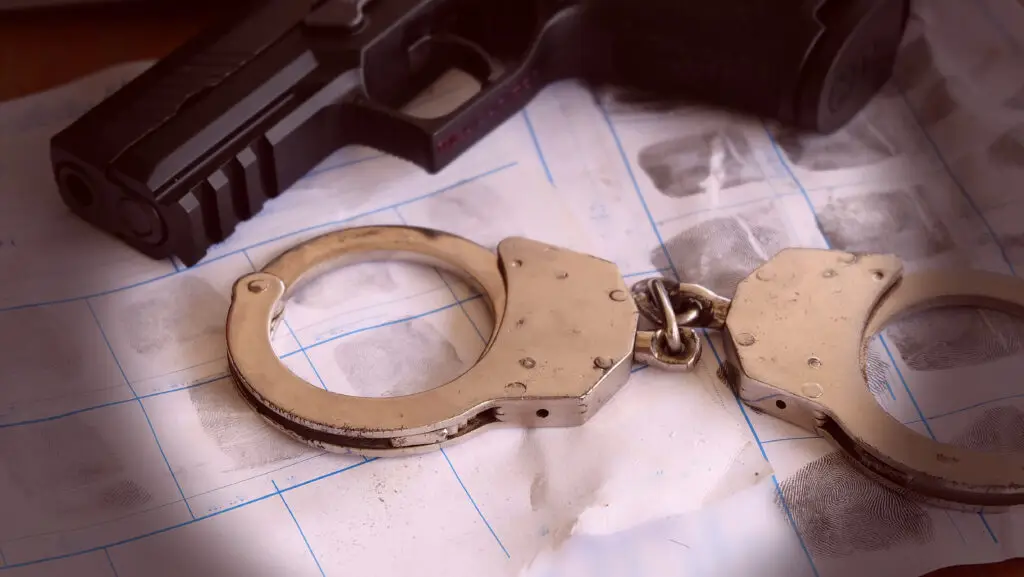
DUI Defense: Where the ‘Criminal Case’ is Only Half the Punishment
DUI cases are a perfect illustration of why criminal defense must be practical. In Pennsylvania, you can be fighting in criminal court while PennDOT is imposing separate consequences that can destroy your ability to work. A great DUI defense doesn’t just argue BAC or sobriety tests; it manages the two-track reality and targets the procedural vulnerabilities that make cases crumble.
There’s another reason DUI cases demand immediate discipline: the stop itself. DUI stops often start with subjective claims like weaving, odor, or “bloodshot eyes.” They’re vulnerable when those claims are exaggerated or when the officer extends the stop beyond what’s lawfully required to address the traffic issue.
Pennsylvania courts have adopted a hard rule on stop duration. According to a February 2 Pennsylvania Superior Court Justia opinion, “Authority for the seizure thus ends when tasks tied to the traffic infraction are—or reasonably should have been— completed.” That’s a legal sentence with real power. It’s the reason Horowitz treats timeline like evidence: if the stop was prolonged without adequate suspicion, the downstream evidence can be poisoned.
DUI refusal cases add another layer, because implied consent warnings and procedures become the battleground. The Commonwealth Court has emphasized how strictly the warning process is treated in license suspension disputes. According to a February 24 Pennsylvania Commonwealth Court Justia opinion, it is “the duty of the police officer to inform the person that,” “the person’s operating privilege will be suspended upon refusal to submit to chemical testing.” In practice, this is why Horowitz audits the warning procedure and documentation, because sloppy process can have real consequences.
Drug Charges: Where Possession Becomes ‘Intent’ Because the State Likes the Bigger Story
Drug cases are not just about what was found; they are about what prosecutors claim it implies. Possession becomes intent to deliver based on cash, packaging, phones, and scales. Conspiracy language expands the case to multiple people. Paraphernalia charges stack on for leverage. And suddenly a working person gets treated like a distributor because it’s administratively convenient.
A great drug defense attorney controls the narrative early by separating facts from inference and challenging overcharging. That includes attacking searches, challenging warrants, and pressuring the state to prove distribution rather than imply it with household objects and suspicious adjectives. It also includes treating phone evidence as a legal problem: how it was obtained, what the warrant allowed, and how prosecutors are interpreting the content.
According to a March 10 U.S. Court of Appeals for the Third Circuit opinion, “An intent to distribute can be inferred circumstantially and relevant factors often include the quantity of drugs possessed, the manner of their packaging, the presence of weapons, large amounts of cash, and equipment commonly used for distribution.”
When clients search criminal defense attorney near me for drug cases, they’re usually trying to avoid the worst case: not just a conviction, but a life-label that blocks housing and jobs. Horowitz’s approach aims to reduce the charge exposure by exposing the evidentiary weakness behind inflated counts, then negotiating from that weakness.
Gun Charges: How Traffic Stops Become Firearm Cases, and How to Choke Them Off Early
Gun cases in Western PA are often born on the road. A stop. A claimed odor. A consent search request. A report that hardens vague observations into reasonable suspicion. This is where procedure decides outcomes.
The Superior Court’s standard for escalating suspicion is not a vibe. According to a January 6 Pennsylvania Superior Court Justia opinion, “a police officer must be able to point to specific and articulable facts leading him to suspect criminal activity is afoot.” That quote matters because it’s how you push back against “nervousness,” “furtive movement,” and other elastic report language.
It also matters for “odor” arguments, especially in the marijuana era. According to a February 2 Pennsylvania Superior Court Justia opinion, “the smell of marijuana does not, by itself, give rise to probable cause for a warrantless vehicle search.” That is a practical defense tool. It’s one reason Horowitz treats vehicle searches as a battleground: if the state’s most common justification isn’t automatically sufficient, the search must be defended step-by-step.
Consent is the other major battleground. Many people consent because they think refusing is risky. The state loves consent because it avoids proving probable cause. Public guidance has made the “no consent” line explicit. According to a February 4 North Penn Now article, “Say, ‘I do not consent to a search.’ Do not physically resist.” That’s the clean boundary between cooperation and surrender. Horowitz’s job after the fact is to litigate whether consent was voluntary, whether it was limited, and whether officers exceeded scope.
Finally, gun cases also intersect with Pennsylvania’s firearm-check systems and paperwork realities. This isn’t just about what’s in a car; it’s often about eligibility, licensing, and forms. According to an October 2, Pennsylvania State Police newsroom release, “The Pennsylvania Instant Check System (PICS) is used … to determine an individual’s legal ability to acquire a license to carry firearms or obtain a firearm…” This kind of official framing helps explain why firearm cases can escalate quickly: the system is built to categorize legality fast, sometimes faster than context deserves.
Theft and Property Crimes: The ‘Minor’ Case That Can Still Ruin Your Future
Theft and property crimes are where people most often get tricked by “it’s not that serious.” It is serious, because theft is one of the fastest ways to become unemployable in whole sectors of the economy. A retail theft case can be a background-check grenade. A receiving stolen property allegation can become a credibility problem that lasts for years. A forgery case can threaten professional licensing. A criminal mischief case can look like “vandalism” to a landlord screening system.
A great defense attorney treats property cases like life cases. That means challenging identification, scrutinizing video, testing witness reliability, and negotiating outcomes that minimize record damage. It also means calling out overcharging: prosecutors often inflate simple disputes into higher-grade theft counts based on value allegations that are not well documented. Horowitz’s operating advantage is the same here: early control. Get the video. Get the receipts. Get the value evidence. Force the state to prove what it’s alleging instead of letting the allegation stand as “common sense.”
According to a June 20 LegalClarity article, “A retail theft conviction can create long-term obstacles, affecting opportunities for employment, housing, and professional licensing.”
What makes theft and property cases so treacherous is that the justice system treats them like “paper crimes,” while employers and landlords treat them like character stains. A violent allegation may spark debate about circumstances; a theft allegation often triggers a silent, instant conclusion: untrustworthy. That’s why the defense work can’t just focus on whether the Commonwealth can prove a statutory element—it has to focus on the narrative weight of the label itself. Horowitz approaches these cases by isolating what the state can actually prove from what it’s trying to insinuate: was there intent to deprive, or a misunderstanding that got charged like fraud? Is the identification clean, or built on assumptions, poor footage, and confirmation bias? Is the value allegation documented with real evidence, or inflated because higher grades create more plea leverage? And if the case is resting on paperwork, he treats the paperwork like the battlefield—receipts, timestamps, inventory reports, chain-of-custody on alleged items, and the gaps that appear when a complainant’s internal records are messy but the accusation is spoken with certainty. Property cases are often where the prosecution’s confidence exceeds the evidence, and that mismatch is exactly where outcomes get reduced, dismissed, or structured to avoid a career-ending record.
Violent Crimes: When the Room Changes and the State’s Story Becomes Moral Theater
Violent crime cases are where the system’s moral instincts become loudest. Assault allegations, robbery counts, domestic incident charges—these cases come with social judgment and prosecutorial intensity. The defense job is to keep the case anchored in evidence rather than emotion.
A great defense attorney here is equal parts investigator and strategist. They locate surveillance footage that contradicts witnesses. They examine medical records for mismatch with the alleged mechanism of injury. They challenge identification procedures. They develop self-defense or defense-of-others themes when supported. They force the state to confront inconsistencies instead of leaning on moral outrage. Horowitz’s style—disciplined, procedural, evidence-first—matters most in this category because the stakes are high and the temptation to rush to judgment is built into the room.
According to a May 22 Innocence Project article, “Eyewitness misidentification has been a leading cause of wrongful convictions across the United States.”
Violent crime cases also expose the criminal system’s oldest weakness: people confuse confidence with accuracy, and prosecutors know it. In assault and robbery allegations, the facts are often filtered through adrenaline, poor lighting, distance, alcohol, and the natural human tendency to lock onto the loudest detail in the room—the alleged weapon, the shouting, the chaos—while everything else gets fuzzy. That’s how shaky identification becomes “certain,” how a fast-moving incident becomes a clean narrative, and how juries get handed a story that feels emotionally true even when the evidence is thin. A strong defense lawyer treats that as a technical problem, not a philosophical one. Horowitz pressures the state’s witness timeline, tests the reliability of identifications, hunts down overlooked video, and cross-checks every claim against physical reality—because violent crime cases don’t just punish the guilty; they can absolutely bury the wrong person if nobody forces the prosecution to slow down and prove each link, not just perform moral certainty.
White-Collar Crimes: When Paperwork Becomes Handcuffs
White-collar cases are rarely “just paperwork” once investigators get involved. Fraud, theft by deception, forgery, embezzlement, identity crimes—these allegations bring reputational fallout that can destroy careers before a verdict exists. They also bring a different kind of prosecutorial approach: the state tries to overwhelm with documents, spreadsheets, and selective narratives that sound devastating until you scrutinize what they actually prove.
A great defense attorney in white-collar cases is someone who can translate complexity into precise legal arguments. That means challenging intent, identifying alternative explanations, contesting the chain of evidence, and negotiating resolutions that protect professional licensing and employability. It also means being comfortable in court if negotiations fail. Horowitz’s prosecutorial background and litigation posture align well here because white-collar cases often hinge on credibility and detail, not theatrics.
According to an April 7 U.S. Securities and Exchange Commission press release, “Regrettably, such resources have been misapplied in prior years to pursue media headlines and run up numbers, and in turn, led to misguided expectations on what constitutes effective enforcement.”
White-collar cases are also where “investigation” becomes its own punishment, because the process is designed to grind you down with volume and uncertainty. Subpoenas, account records, email pulls, audit trails, and interviews can drag on while your employer, partners, or clients quietly assume the worst—often long before any charge is filed. And when prosecutors frame a case around a clean story of greed and deception, they tend to treat messy business reality like it’s suspicious by default: a bookkeeping error becomes “falsification,” a policy ambiguity becomes “scheme,” a bad decision becomes “intent.” Horowitz’s advantage in this arena is that he doesn’t let the government’s document dump substitute for proof. He forces specificity: what exactly is alleged, which transactions matter, what the state must show about intent, and where the narrative relies on inference instead of a defensible evidentiary chain. That’s how you keep a white-collar case from becoming a career-ending slow bleed—by tightening the scope, challenging overreach, and pushing back early before “allegation” hardens into “assumed fact.”
Probation Violations: The Quiet Trap That Turns Supervision Into Incarceration
Probation violations don’t get enough respect from defendants because they don’t always start with new criminal allegations. They start with a notice. A missed appointment. A positive test. A curfew issue. A technical breach that gets treated as moral failure. Then the court acts.
A great defense attorney in violations cases understands that the best defense is often contextual and documented: show the court what happened, why it happened, and why incarceration isn’t the answer. But they also know when to challenge the allegation itself, especially when the violation claim is based on weak evidence or administrative error. Horowitz treats violation cases as high stakes because they are. The difference between reinstatement and jail can be a single hearing, and the system is often impatient with explanations unless they are presented strategically.
According to a December U.S. Courts Judicial Business report page, “Technical violations led to 67 percent of the 17,896 revocations of post-conviction supervision reported.”
Probation violations are where the system quietly turns “supervision” into a backdoor sentence extension, because the state doesn’t need a new charge to put you in custody—it just needs a judge to decide you “didn’t comply.” That’s why these cases are so dangerous for working people: a missed check-in because your shift ran late, a failed test tied to relapse or medication confusion, a housing change you didn’t report quickly enough, or an officer’s paperwork error can all be framed as defiance. The defense move is to stop treating the violation as a morality debate and treat it as an evidence-and-process hearing: what was the exact condition, what notice was given, what documentation exists, what alternative explanation is verifiable, and what sanction is proportionate. This is also where Horowitz’s approach matters—he comes in ready to build a record, not beg for mercy, because the easiest way to lose a violation hearing is to walk in with nothing but excuses and hope the court is in a good mood.
Serious Traffic Violations: When Driving Isn’t Optional, and a Suspension Isn’t ‘Administrative’
Traffic cases can be deceptively life-altering, especially for CDL holders, tradespeople, and anyone who commutes long distances. Reckless driving, habitual offenses, accidents with allegations of leaving the scene—these can trigger insurance blowups, employment loss, and license suspensions that are functionally economic penalties. A good defense attorney treats traffic cases as the first line of keeping someone employed.
Horowitz’s DUI and commuter-focused experience informs this category too: he understands that PennDOT consequences are not abstract, and he structures defense work with license outcomes in mind. That includes challenging stop validity, contesting officer conclusions, negotiating reductions, and managing administrative timelines.
According to a Cornell Law School stature, “A driver who is disqualified shall not drive a commercial motor vehicle. A motor carrier shall not require or permit a driver who is disqualified to drive a commercial motor vehicle.”
The part most people miss is that “serious traffic” isn’t just about points or fines—it’s about whether your livelihood is legally allowed to exist. For CDL holders, fleet drivers, and anyone whose employer treats driving as a core job function, a disqualification can trigger an instant, non-negotiable work ban, because carriers can’t “make an exception” even if your bills are screaming. That’s why a real traffic defense strategy isn’t just about pleading something down to sound nicer; it’s about preventing the kind of conviction that forces an employer’s hand and turns one bad decision into an employment termination event. Horowitz approaches serious traffic cases like that—pressure-testing the stop, the officer’s basis, the evidence for recklessness or leaving the scene, and the procedural steps that can be challenged—because the goal isn’t merely to “resolve” the ticket, it’s to keep a driver legally employable in a system where disqualification is treated as automatic and absolute.
What Makes Joseph Horowitz Different: A Practical Defense Method
In a market full of criminal defense attorneys, “difference” is often marketing noise. Horowitz’s difference is operational.
He starts with control: preserve evidence, lock down timelines, and force specificity before the state’s story ossifies.
He builds leverage: not by bluffing, but by creating a credible path to motions practice and trial readiness. That’s how prosecutors start making better offers.
He treats procedure like a weapon: stop duration, search scope, warning compliance, chain of custody, lab integrity, phone warrants, consent voluntariness. In modern criminal defense, procedure is where “clean cases” die.
He treats life fallout as part of the case: employment, licensing, housing, immigration risk. That’s why the question criminal defense attorney near me is really asking is: who will defend my life, not just my docket number?
And he keeps the tone professional but realistic. Courts don’t reward theatrics. They reward preparation. Jurors don’t reward yelling. They reward clarity. Judges don’t reward excuses. They reward grounded arguments supported by facts. Horowitz’s style aligns with the people making the decisions.
How to Pick a Criminal Defense Attorney Near Me Without Getting Fooled by Marketing
If you want a common-sense checklist, it’s simple. Does the lawyer talk about evidence, or do they talk about themselves? Do they discuss the stop and search mechanics, or do they jump straight to “we’ll negotiate”? Do they understand collateral consequences, or do they treat them like your problem later? Do they have a plan for immediate evidence preservation, or do they say “we’ll see what discovery shows”? Does their strategy make sense for your real life?
The criminal system is not designed to educate defendants. It is designed to process them. The best defense attorneys interrupt processing with law.
The Case is Not Your Identity, But It Can Become Your Future if You Let It
When you’re charged with DUI, drugs, guns, theft, violence, white-collar allegations, probation violations, or serious traffic offenses, the stakes aren’t limited to the courthouse. They spill into employment, housing, relationships, and the ability to move through life without being treated like a permanent risk. The NICCC definition is the reminder that collateral consequences are not hypothetical.
If you’re searching criminal defense attorney near me, you don’t need platitudes. You need a plan that starts early, pressures procedure, and negotiates from evidence rather than fear. Joseph Horowitz’s practice is built around that reality. It’s not about charming the system. It’s about forcing it to meet its burden—cleanly, lawfully, and on the record—so your case doesn’t turn into a lifelong label. Horowitz delivers criminal defense with integrity and skill. Make a wise choice now—an attorney who listens, defends intelligently, and knows the terrain—makes all the difference. Contact Joseph Horowitz Law today and give your future the robust criminal defense it deserves.
